









Nnamdi Kanu’s rise as the face of the modern Biafran movement is rooted in decades of unresolved tensions between the Nigerian state and the southeastern region. As founder of the Indigenous People of Biafra (IPOB), he revived secessionist sentiment by tapping into memories of the 1967–1970 Civil War and amplifying claims of political and economic marginalization of the Igbo people. Through Radio Biafra, he broadcast messages from London that challenged the legitimacy of the Nigerian state. While his supporters celebrate him as a symbol of self-determination, the government considers IPOB a violent separatist group, designating it a terrorist organization in 2017. This fundamental disagreement set the stage for one of Nigeria’s most consequential political and legal battles of the 21st century.

The confrontation deepened after Kanu’s first arrest in 2015, when he was charged with terrorism, treasonable felony, and managing an unlawful society. His periodic releases, clashes with security agencies, and the controversial 2017 military raid on his home transformed him into both a martyr and a controversial figure. After fleeing the country, Kanu continued broadcasting from abroad until his dramatic and widely criticized 2021 rendition from Kenya back to Nigeria. Human rights groups, the United Nations, and international observers condemned the rendition as illegal. Yet for the Nigerian government, bringing Kanu back was considered essential to restoring order in a region distrupted by sit-at-home directives, attacks on security formations, and the rise of so-called “unknown gunmen.”
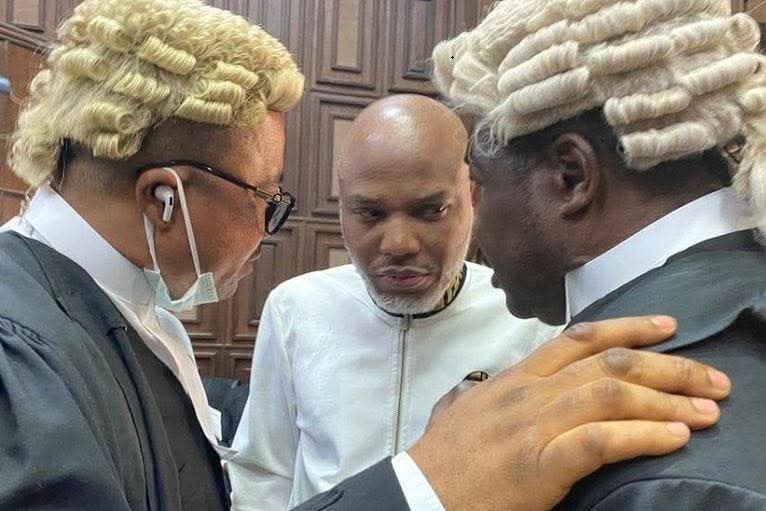
The trial that followed became one of the lengthiest and most contentious in Nigeria’s judicial history. Originally facing 11 charges that were repeatedly amended and partially struck out, Kanu eventually stood trial on seven terrorism-related counts under the Terrorism Prevention and Prohibition Act. The prosecution relied on his Radio Biafra broadcasts, alleged instigation of violence, and the economic devastation caused by IPOB-linked sit-at-home orders. The defense argued that Kanu’s advocacy was protected political speech and that his trial was tainted by the illegality of his rendition. The courtroom proceedings were marked by accusations of bias, judicial recusals, dramatic confrontations, and, at one point, Kanu’s decision to sack his legal team and represent himself.
On November 20, 2025, Justice James Omotosho delivered a landmark judgment that convicted Kanu on all seven counts. The court concluded that his statements, orders, and broadcasts directly fueled violence, led to multiple deaths, and inflicted severe economic losses in the Southeast. Although the terrorism charges carried the possibility of a death sentence, the court instead imposed a life sentence alongside 20-year and 5-year terms to run concurrently, citing humanitarian and international considerations. The judgment sparked jubilation among some Nigerians who interpreted it as a victory for national security, while for many in the Southeast, it reinforced long-standing fears of selective justice and ethnic double standards.
The conviction intensified an already volatile political and social atmosphere. IPOB supporters, civil society groups, and numerous analysts argue that the verdict deepens distrust in the federal government and risks inflaming further unrest. Critics contrast Kanu’s life sentence with far lighter penalties given to militants, bandits, and terrorists elsewhere in the country. Others, however, maintain that the ruling represents a necessary warning against violent separatism and the breakdown of law and order. Amid this divide, security forces have strengthened their presence across the Southeast, bracing for potential disturbances, while political leaders appeal for calm as the region grapples with renewed anxiety.
Kanu’s legal team has vowed to appeal the ruling, suggesting that the case will continue to shape Nigeria’s political landscape for years. Beyond the courtroom, however, the deeper issues remain unresolved, regional grievances, debates over restructuring, ethnic distrust, and questions about Nigeria’s federal model. The Kanu saga is no longer just a trial, it is a mirror reflecting the cracks within the nation. As appeals proceed and tensions simmer, one truth is increasingly clear, Nigeria’s path to stability may depend less on criminal verdicts and more on addressing the longstanding grievances that drive separatist agitation in the first place.
©️ Adebamiwa Olugbenga Michael
Lagos-based political Analyst Exploring Ethnic Economics & Urban Policy Through Open-Source Data